
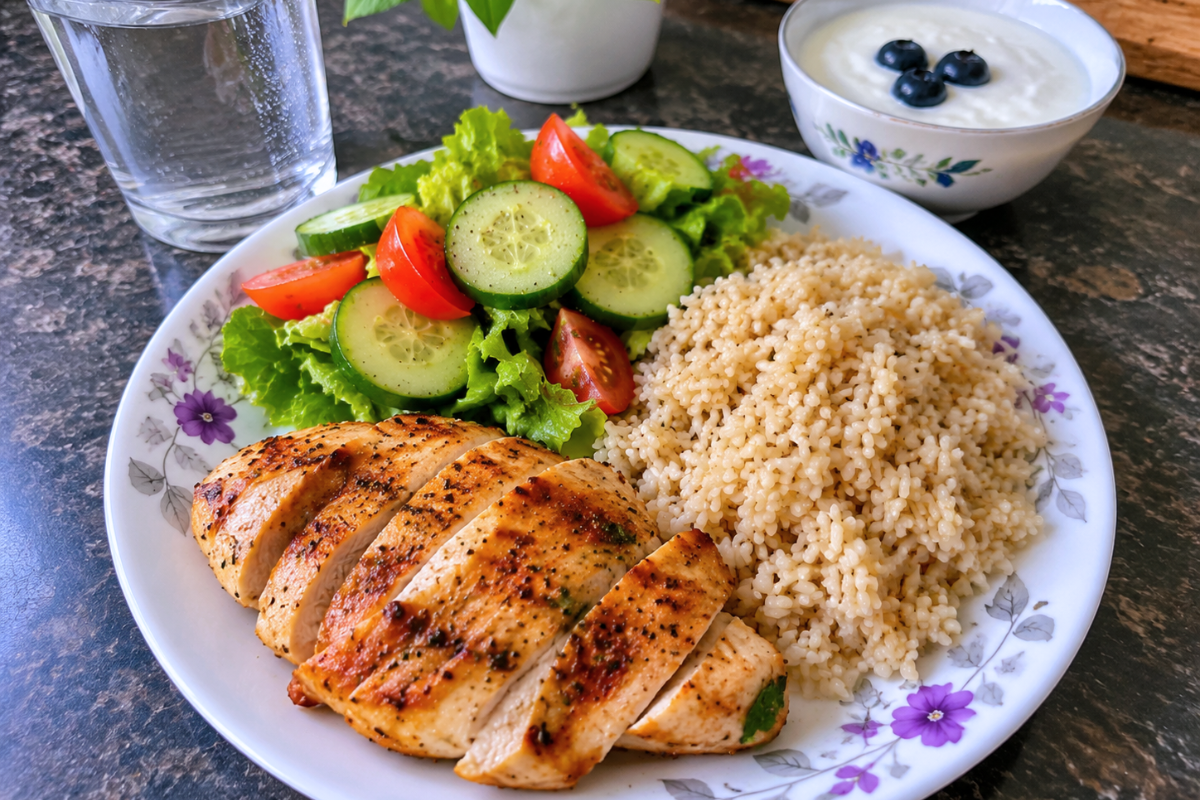
Ultimate 7-Day Weight Loss Meal Plan for Beginners
Losing weight doesn’t mean you have to give up your favorite foods or follow a complicated diet. A simple, balanced weight loss meal plan can help you build healthier eating habits, manage hunger, and make everyday meals easier to plan.
This 7-day weight loss meal plan for beginners includes easy breakfast, lunch, dinner, and snack ideas made with everyday ingredients. You’ll find options such as oatmeal, eggs, chicken, beans, yogurt, vegetables, and whole grains.
Whether you’re cooking for yourself, preparing meals for a busy workweek, or trying to eat healthier on a budget, this guide can help you get started. It also includes a grocery list and practical meal-prep tips to help you organize your week.
Important: Your calorie needs depend on your age, body size, activity level, and health. This plan is a flexible starting point, not a personalized medical diet. You don’t need to skip meals or go hungry to work toward a healthier weight.
How to Follow This 7-Day Weight Loss Meal Plan
Use this 7-day weight loss meal plan as a flexible guide. Choose foods and portion sizes that fit your preferences, budget, and daily routine.
Before starting, keep these simple principles in mind:
- Include protein: Foods such as eggs, chicken, fish, Greek yogurt, tofu, lentils, and beans can help you feel satisfied.
- Eat fiber-rich foods: Vegetables, fruits, oats, beans, and whole grains support digestion and can help you feel full.
- Choose balanced meals: Combine protein, vegetables or fruit, and a source of carbohydrates.
- Pay attention to portions: Start with a comfortable serving and adjust based on your hunger, activity, and needs.
- Drink water regularly: Water is a useful everyday drink. You don’t need detox drinks to lose weight.
- Stay flexible: Swap foods based on your preferences, budget, culture, and availability.
You can adjust meal times to fit your daily routine. Consistency matters more than following a perfect schedule.
Your 7-Day Healthy Weight Loss Meal Plan
This plan offers three main meals and optional snacks each day. The meals are suggestions, so adjust portions to suit your individual needs.
Day 1: Simple and Balanced
Breakfast: Banana Oatmeal
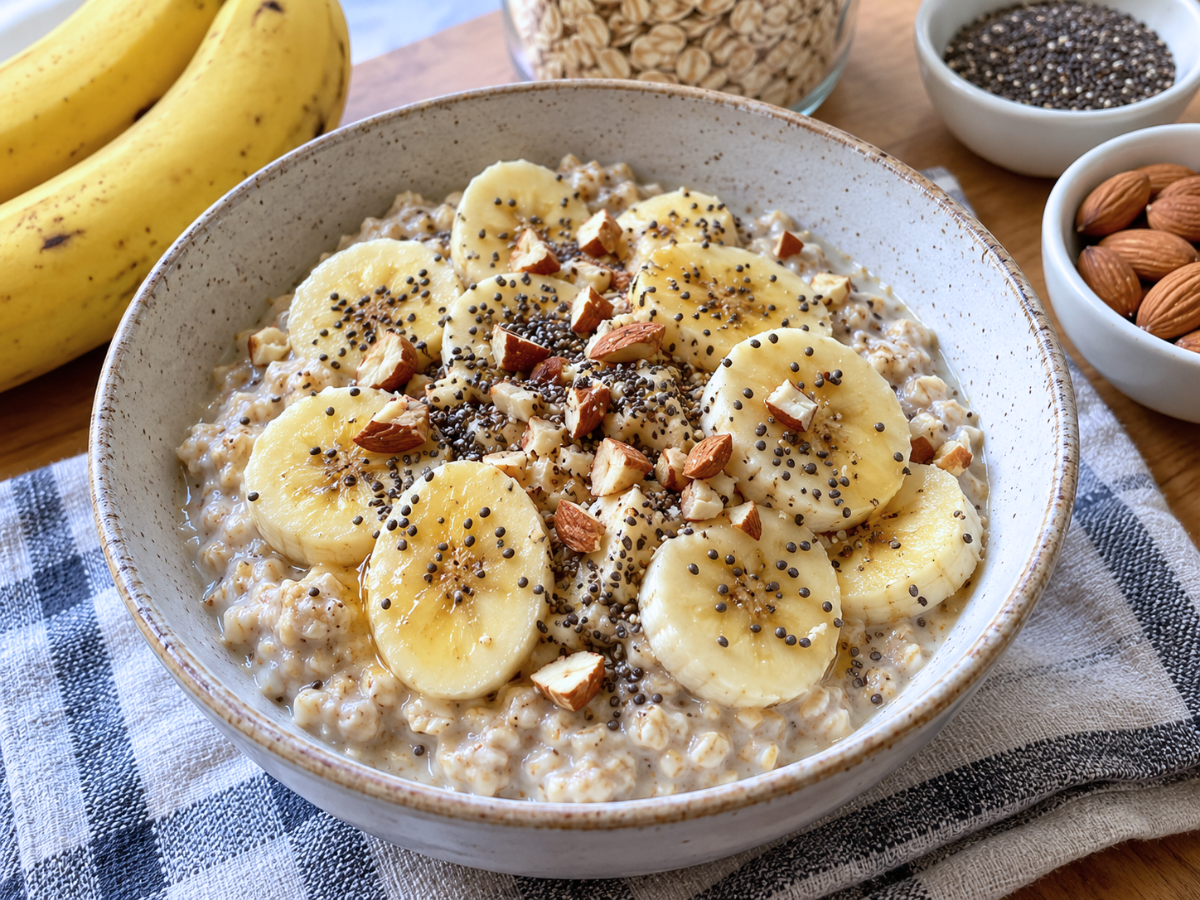
- Rolled oats cooked with milk or unsweetened soy milk
- Sliced banana
- A sprinkle of cinnamon
- A small serving of nuts or seeds
Lunch: Grilled Chicken Salad Bowl
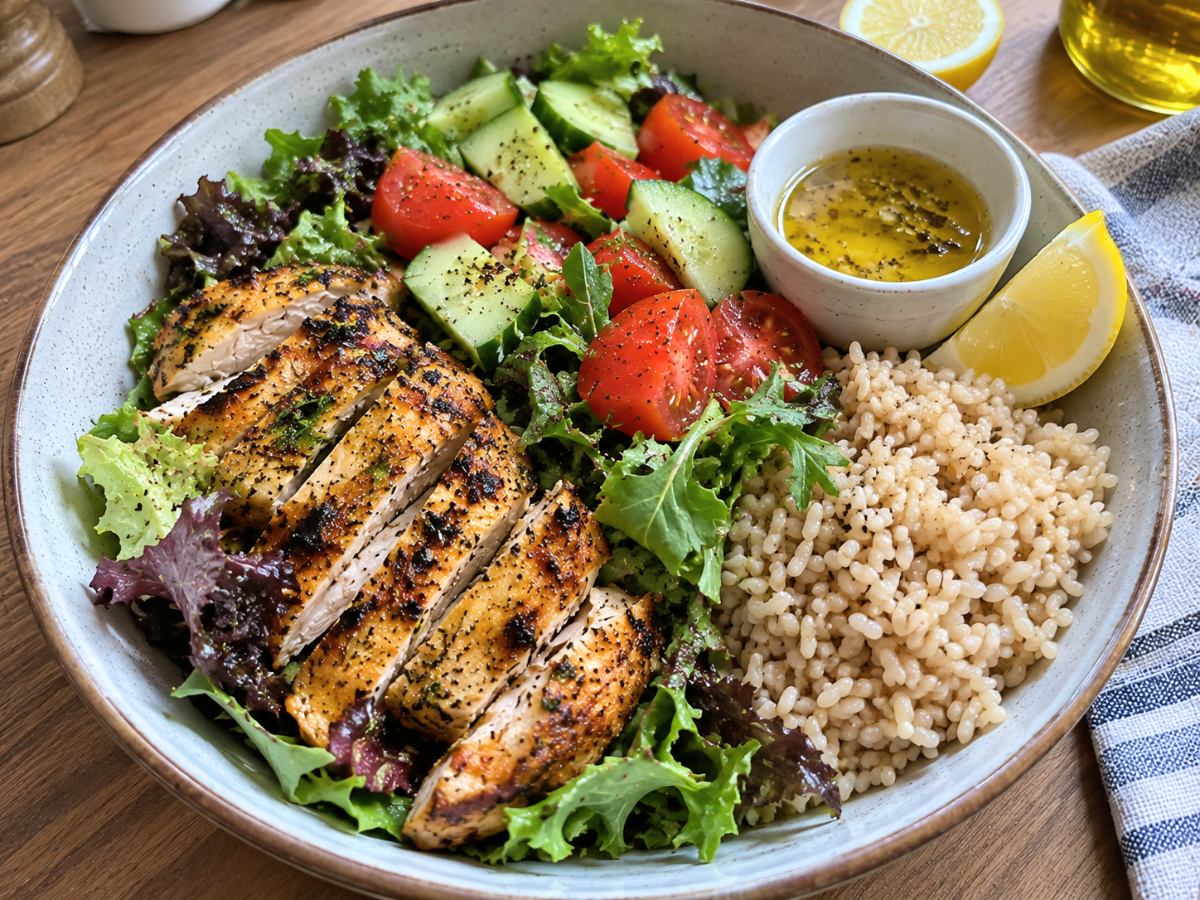
- Grilled chicken breast
- Mixed greens, cucumber, and tomatoes
- Brown rice or whole-grain bread
- Olive oil and lemon dressing
Dinner: Salmon, Potatoes, and Vegetables
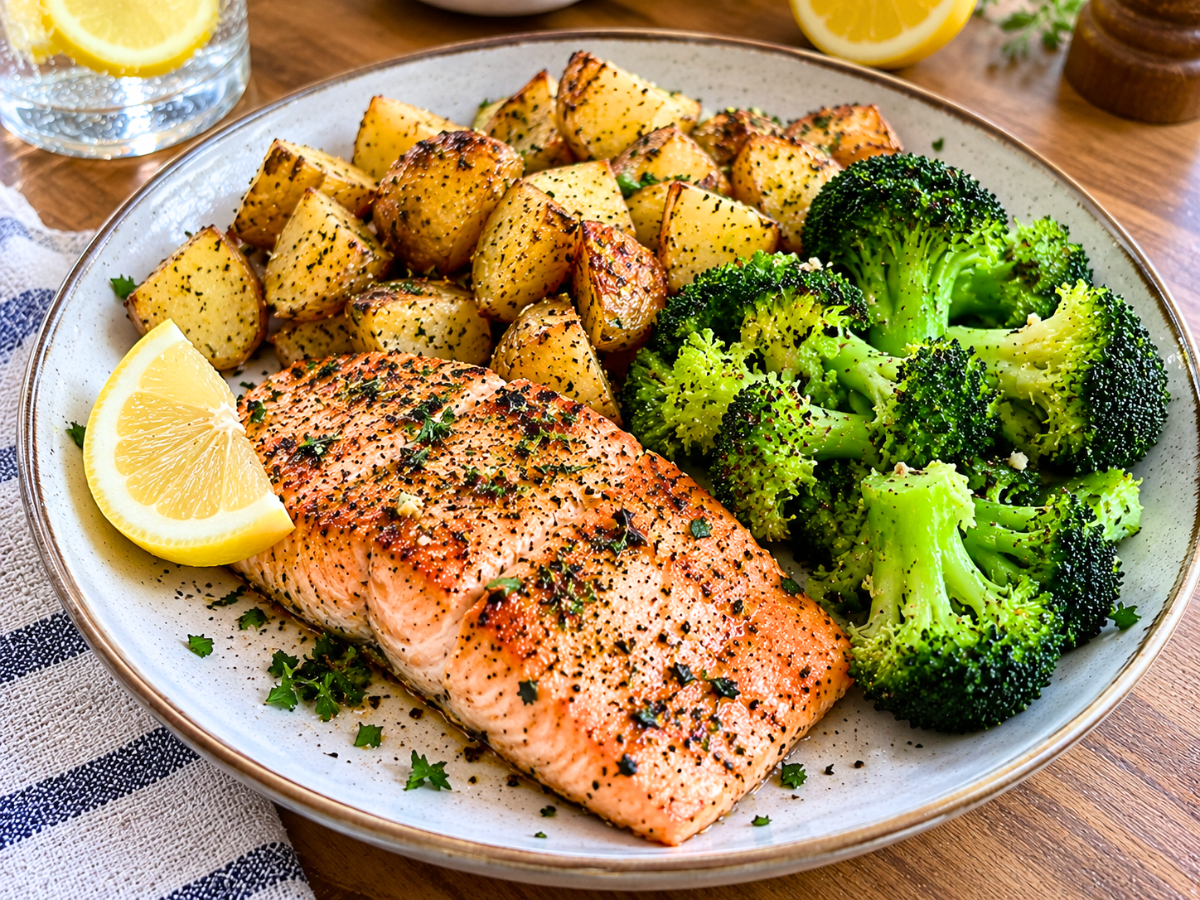
- Baked salmon
- Roasted potatoes
- Steamed broccoli
- Lemon, herbs, and black pepper
Optional snack: Plain Greek yogurt with berries.
Why it works: This day combines protein, fiber-rich foods, and carbohydrates to make meals satisfying and practical.
Day 2: Easy Meals for Busy Days
Breakfast: Eggs and Whole-Grain Toast
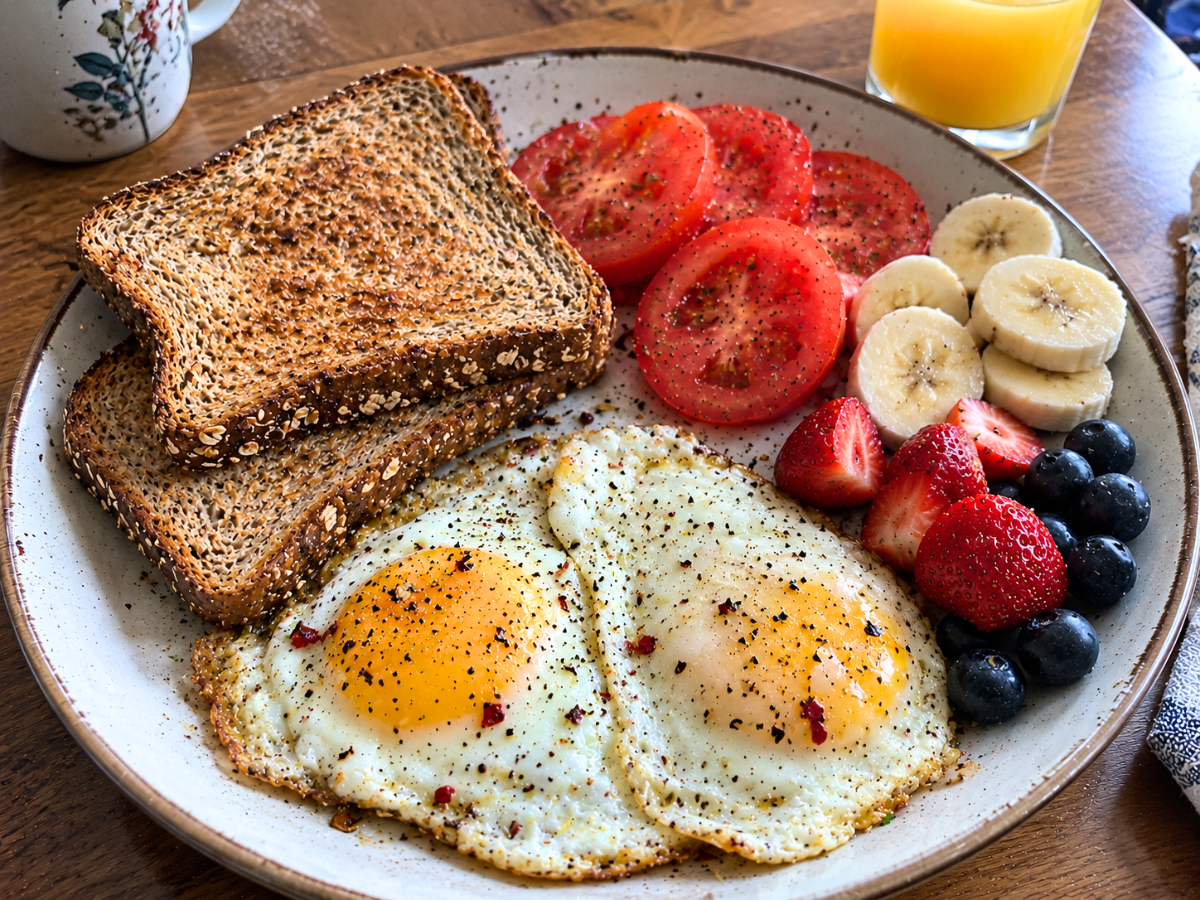
- Two eggs, prepared to your preference
- Whole-grain toast
- Sliced tomatoes or fruit
Lunch: Turkey and Avocado Wrap
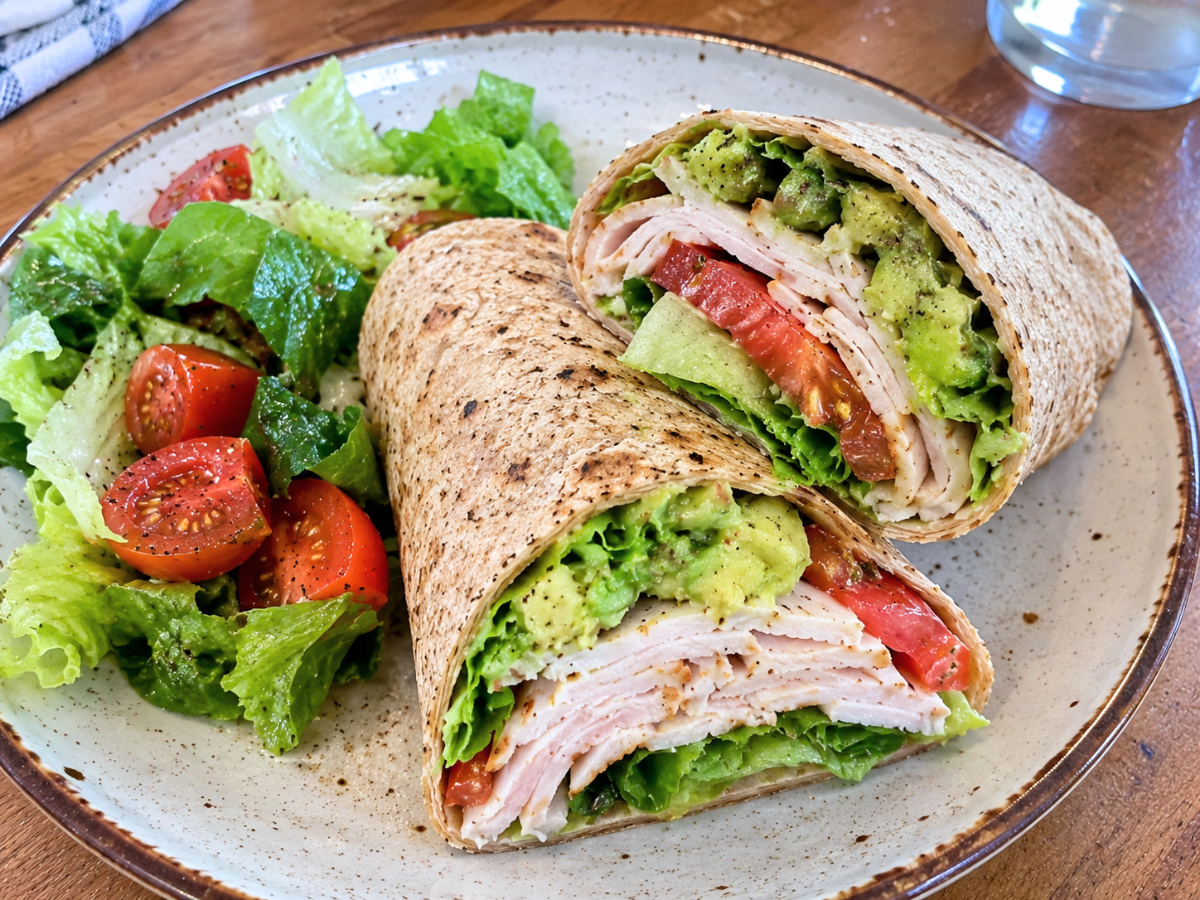
- Whole-wheat tortilla
- Sliced turkey
- Lettuce and tomatoes
- A little mashed avocado
Dinner: Chicken and Vegetable Stir-Fry
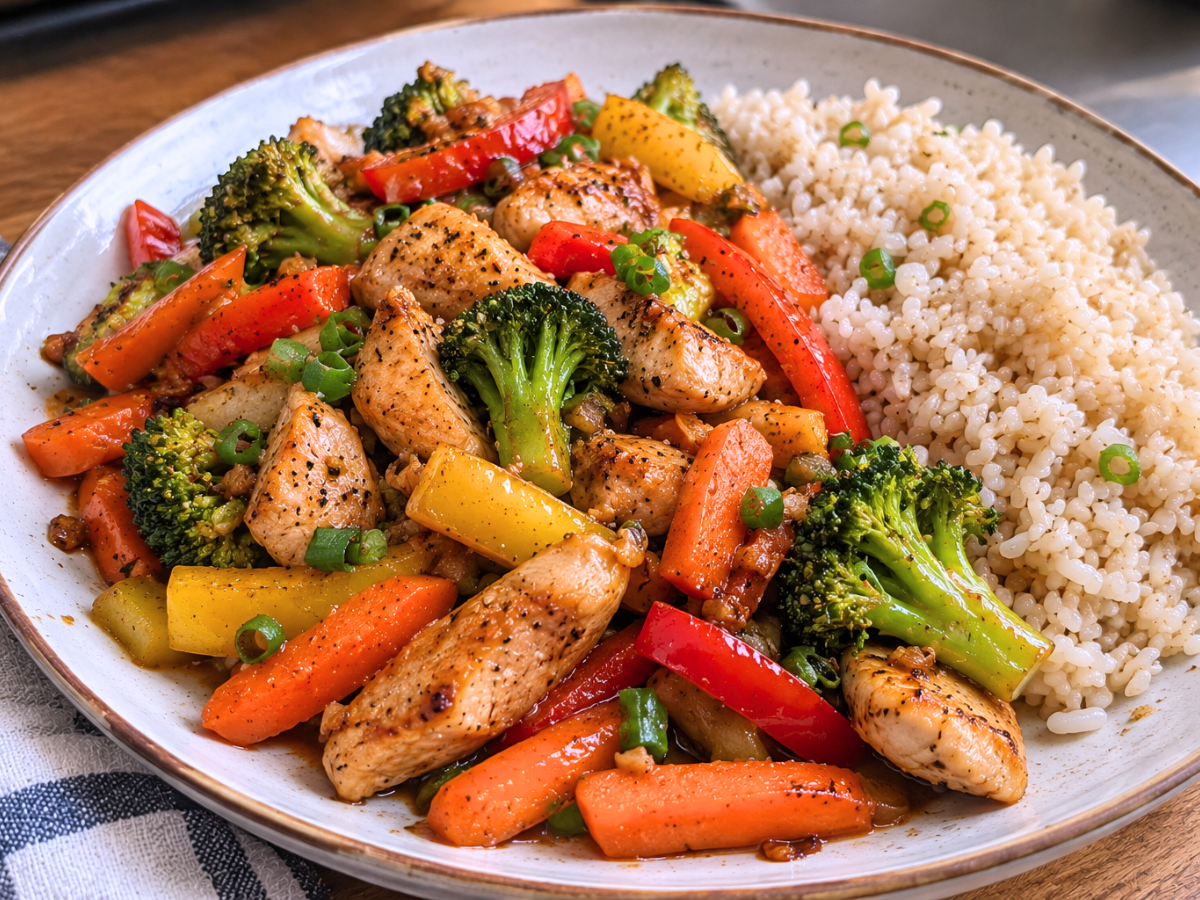
- Chicken pieces
- Bell peppers, broccoli, and carrots
- Brown rice
- Garlic, ginger, and lower-sodium soy sauce
Optional snack: Apple slices with peanut butter.
Why it works: These meals use familiar ingredients and can be prepared quickly, making them useful for a busy workday.
Day 3: More Fiber and Plant-Based Options
Breakfast: Greek Yogurt and Berry Bowl
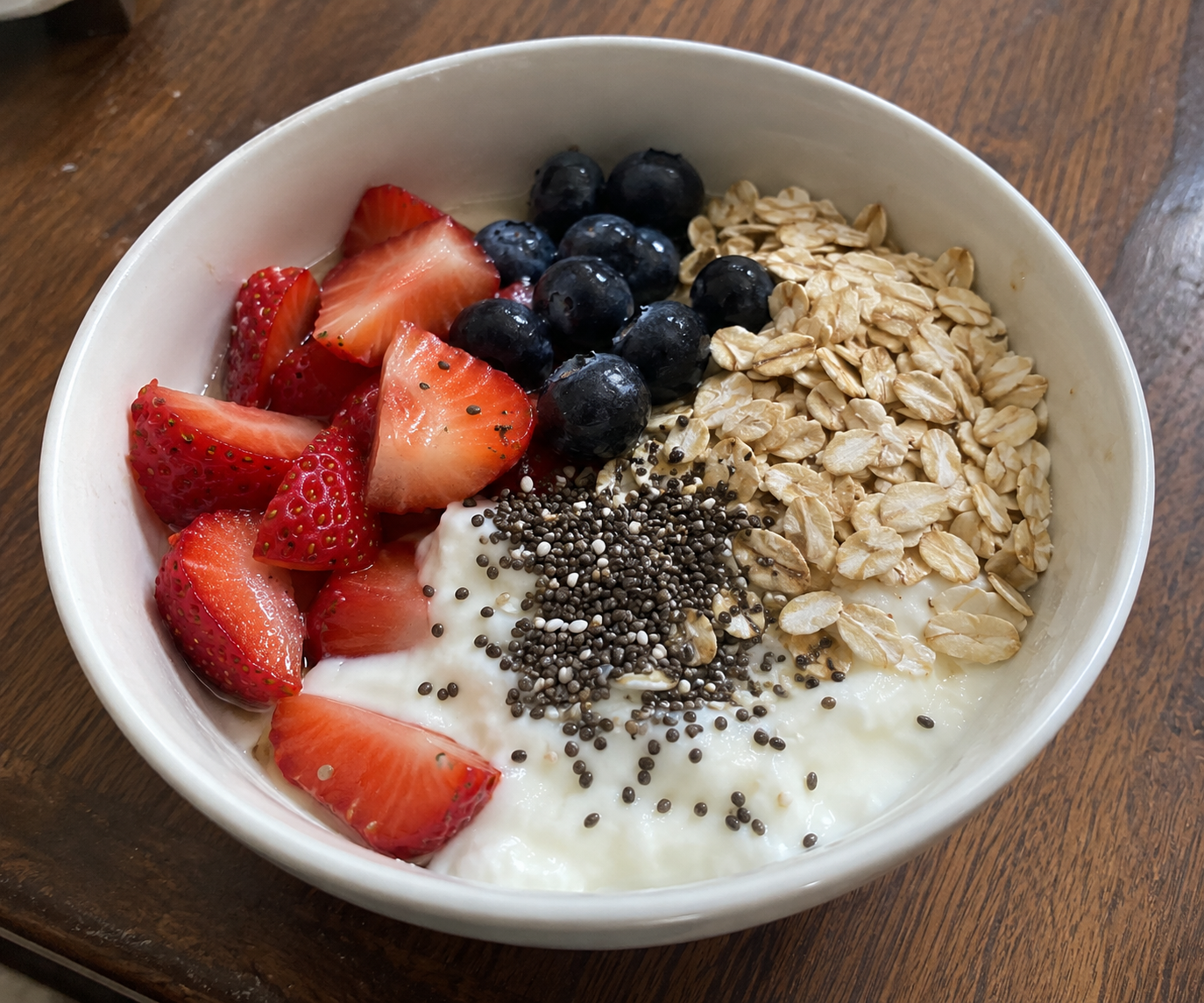
- Plain Greek yogurt
- Strawberries or blueberries
- Rolled oats
- Chia seeds
Lunch: Chickpea and Vegetable Bowl
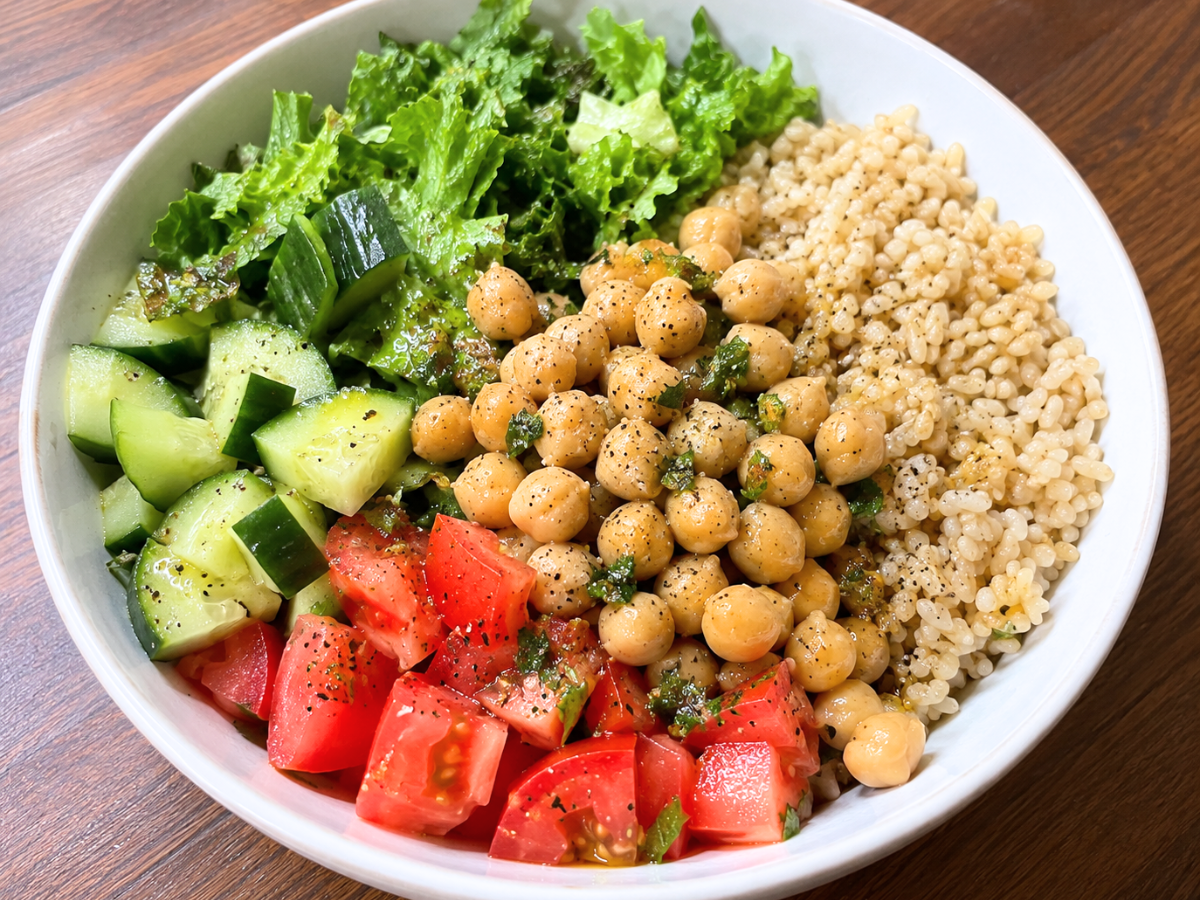
- Cooked chickpeas
- Cucumber, tomatoes, and leafy greens
- Brown rice or quinoa
- Lemon and olive oil dressing
Dinner: Bean and Vegetable Chili
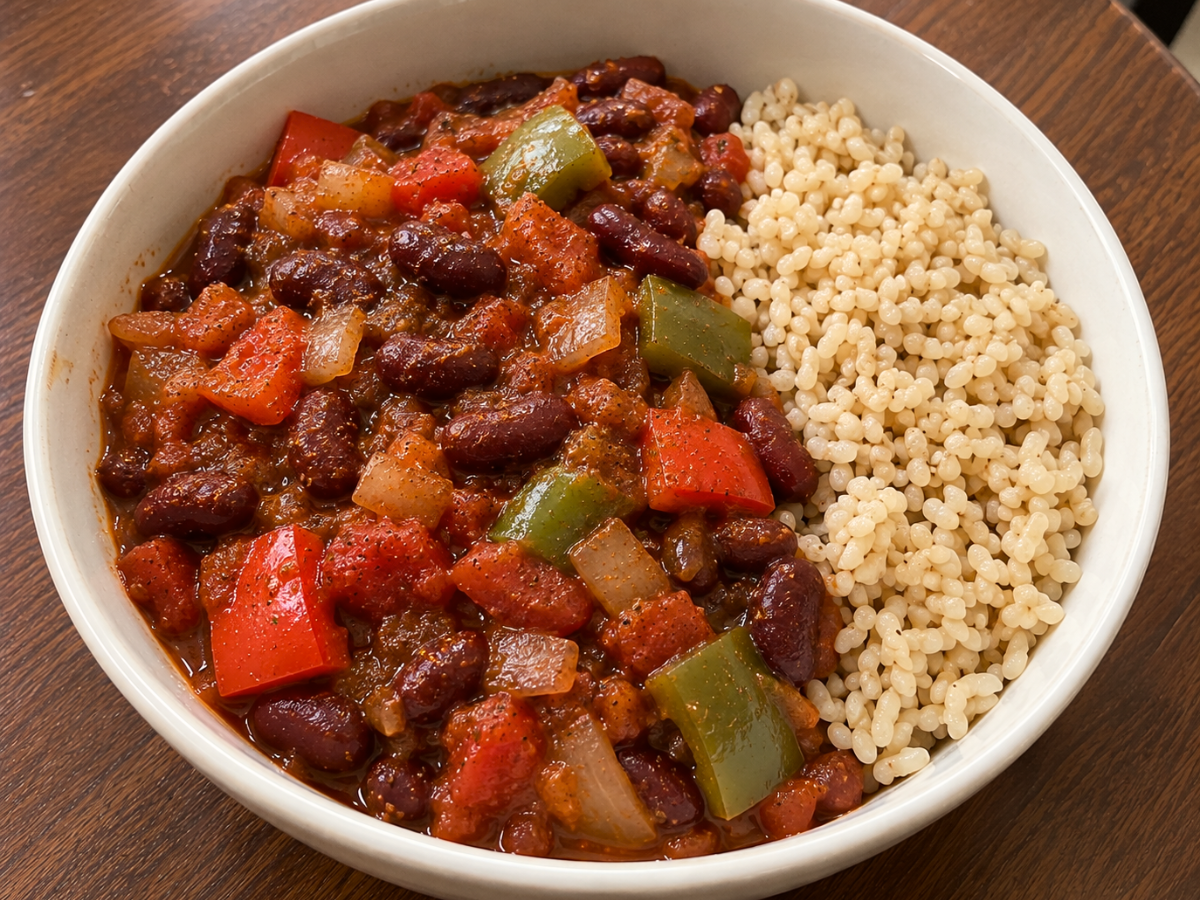
- Kidney beans or black beans
- Tomatoes, onions, and bell peppers
- Chili powder and cumin
- A serving of brown rice, if desired
Optional snack: Carrot sticks with hummus.
Why it works: Beans, chickpeas, fruit, vegetables, and oats provide fiber, while yogurt and legumes contribute protein.
Day 4: Protein-Rich Everyday Meals
Breakfast: Spinach and Egg Scramble
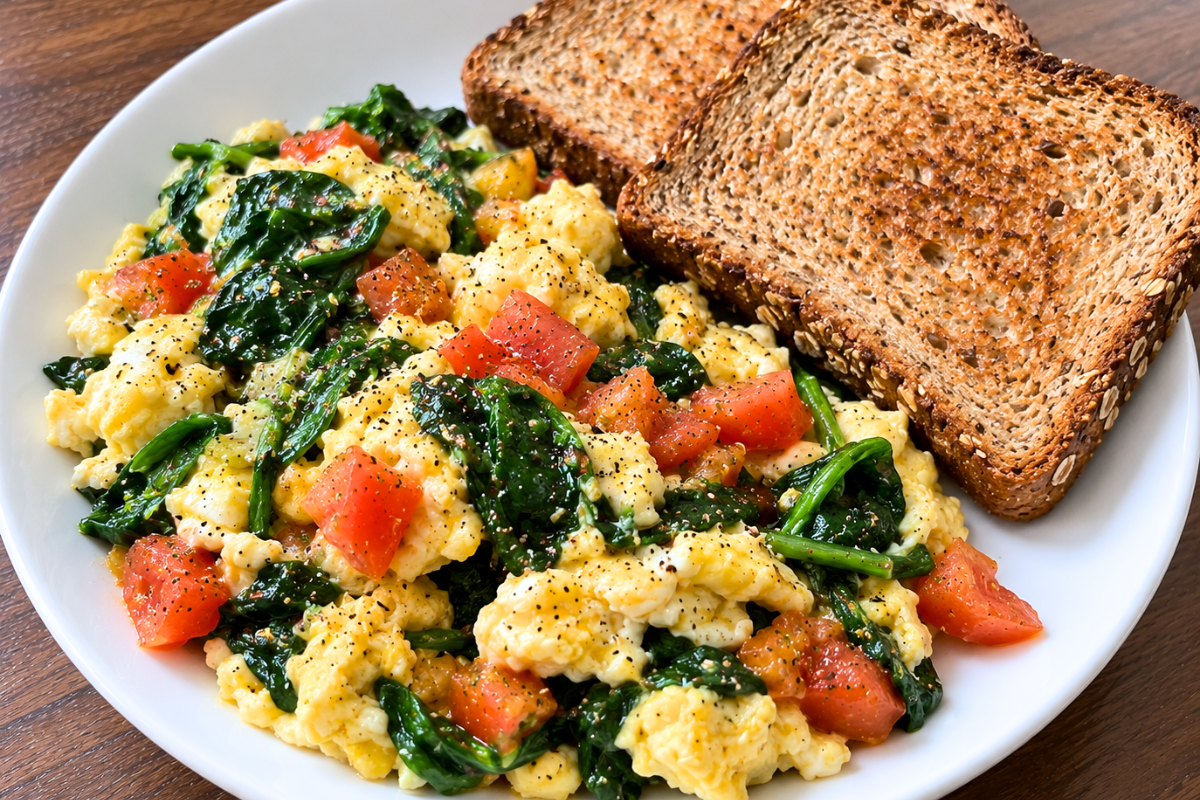
- Eggs
- Fresh spinach
- Mushrooms or tomatoes
- Whole-grain toast
Lunch: Tuna Salad Sandwich
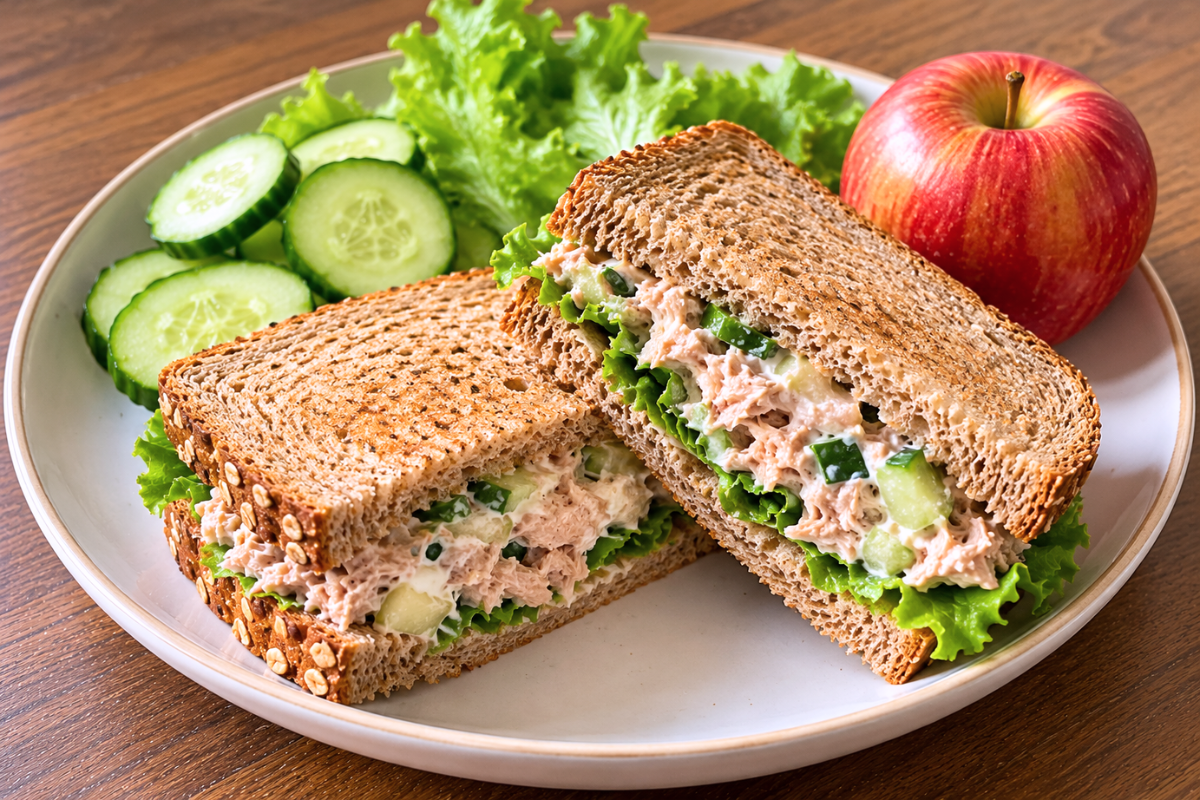
- Tuna mixed with plain Greek yogurt or a small amount of mayonnaise
- Whole-grain bread
- Lettuce and cucumber
- A piece of fruit
Dinner: Tofu and Vegetable Rice Bowl
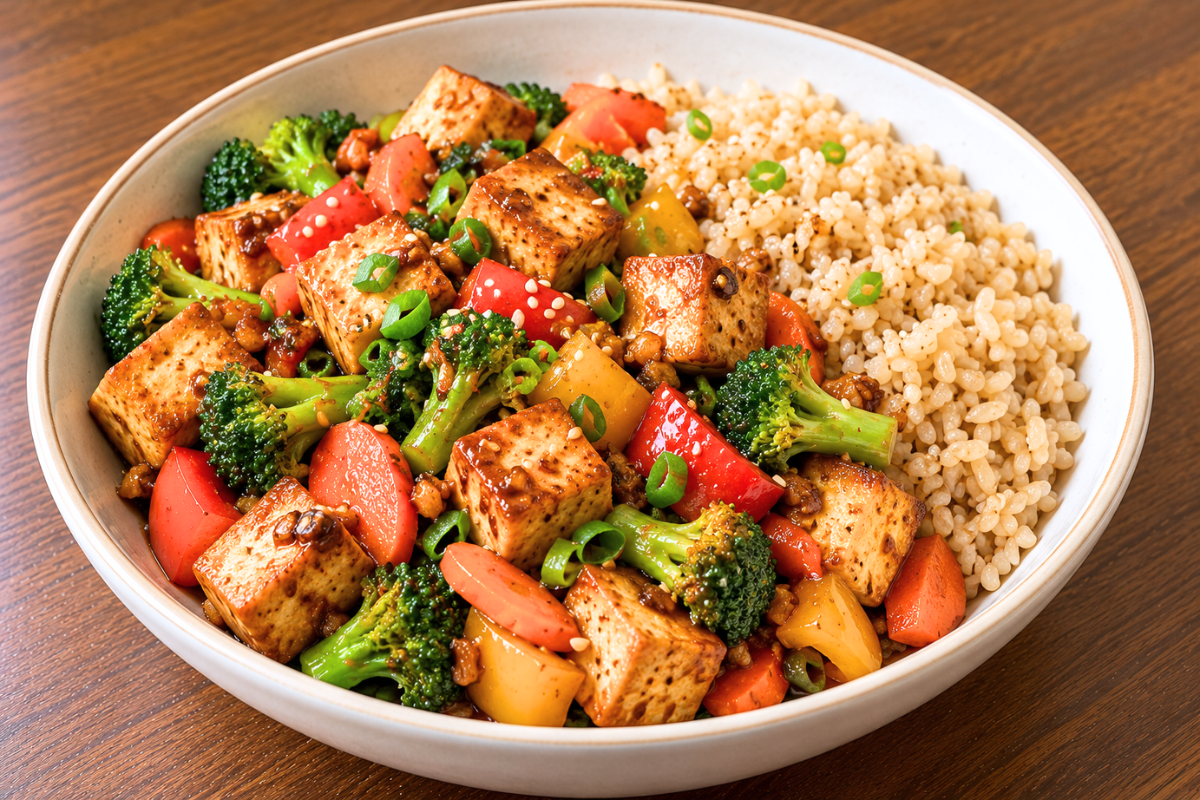
- Firm tofu
- Broccoli, carrots, and bell peppers
- Brown rice
- Garlic, ginger, and soy sauce
Optional snack: Cottage cheese with fruit.
Why it works: Eggs, tuna, tofu, and cottage cheese provide protein, while vegetables and whole grains help round out the meals.
Day 5: Simple Homemade Favorites
Breakfast: Peanut Butter Banana Toast
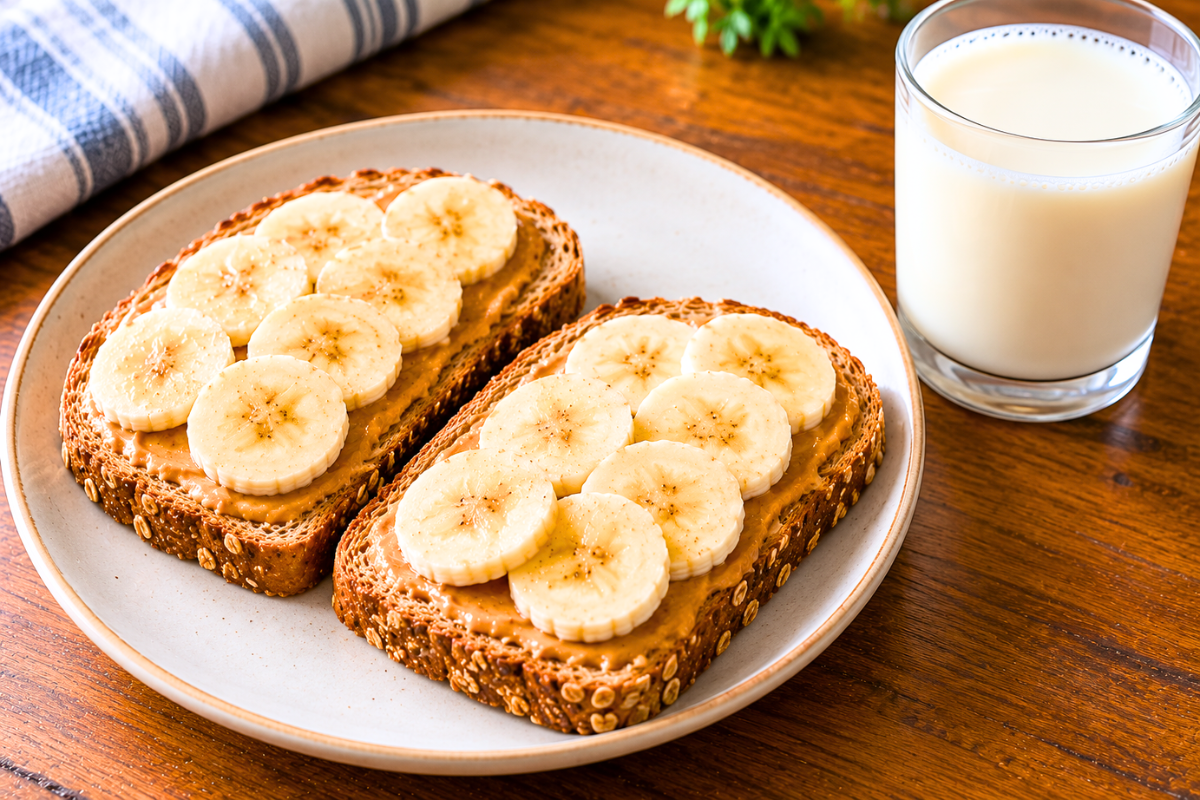
- Whole-grain toast
- Peanut butter
- Sliced banana
- Milk or unsweetened soy milk, if desired
Lunch: Chicken and Quinoa Bowl
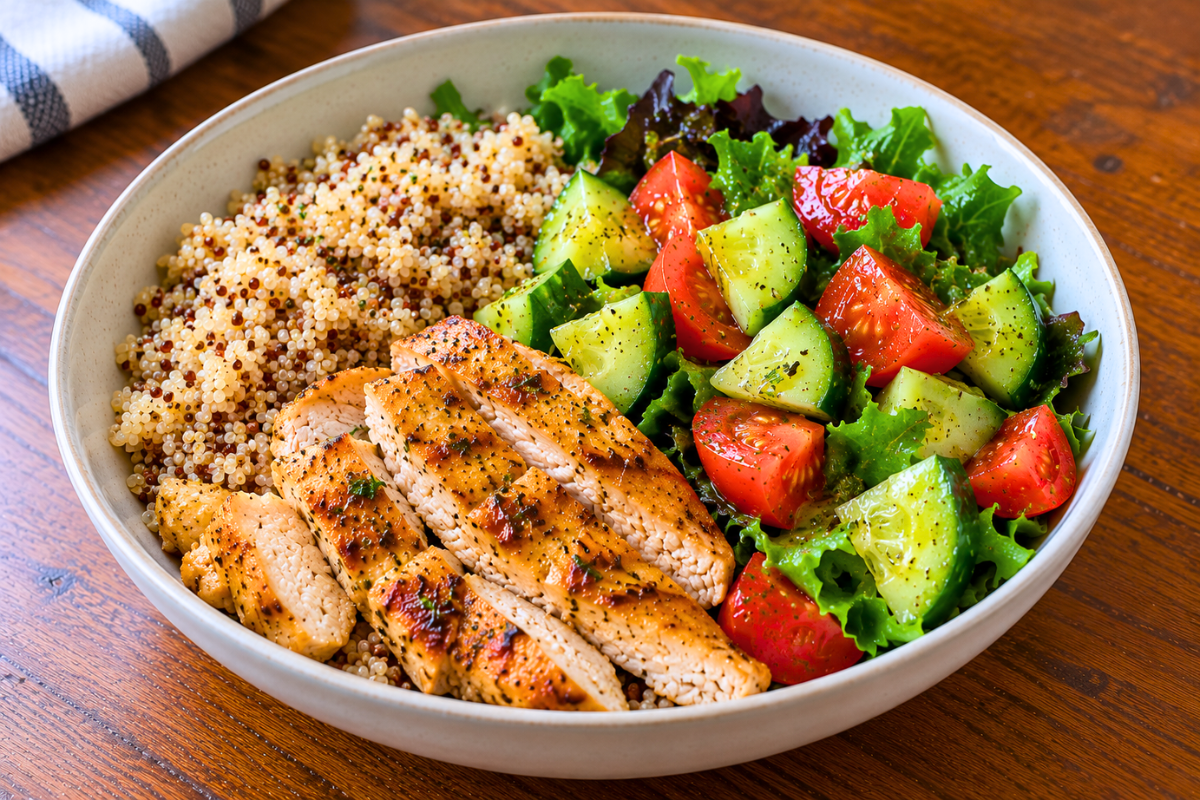
- Cooked chicken
- Quinoa
- Cucumber, tomatoes, and greens
- Lemon dressing
Dinner: Turkey Meatballs with Whole-Wheat Pasta
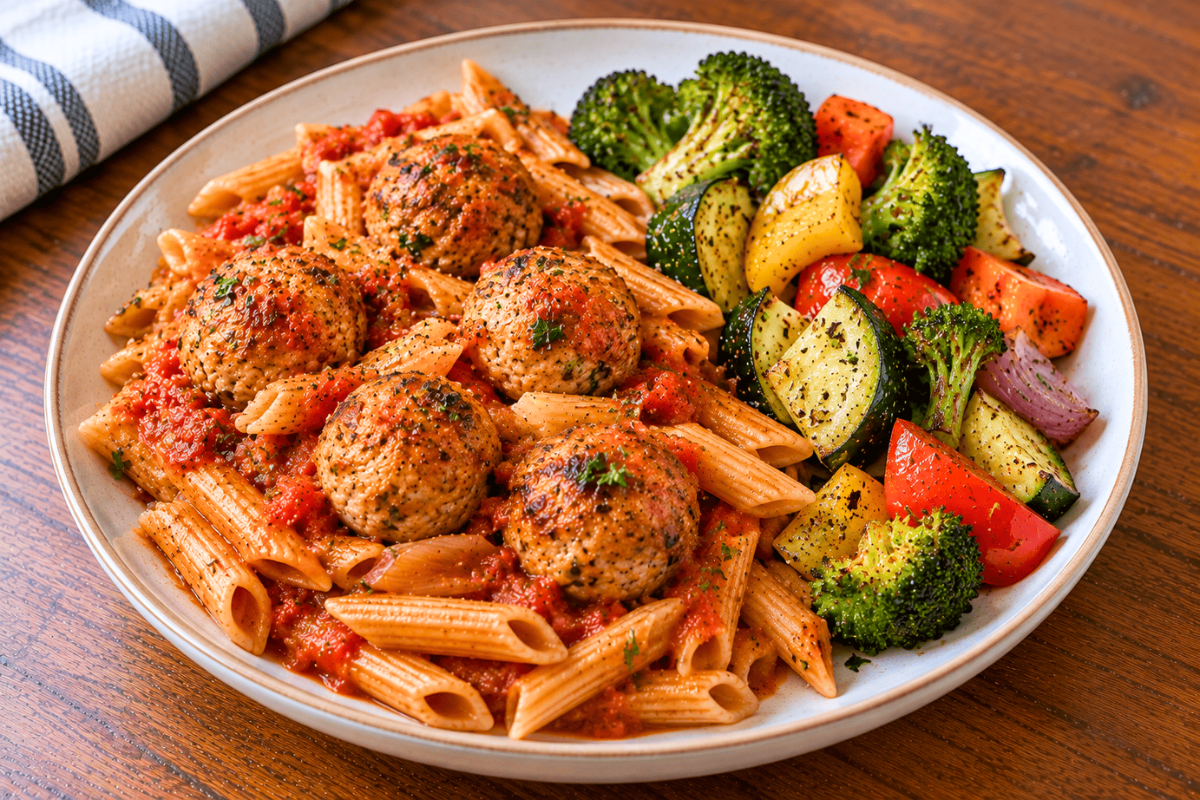
- Lean ground turkey meatballs
- Whole-wheat pasta
- Tomato sauce
- A side of roasted vegetables
Optional snack: Plain yogurt with cinnamon.
Why it works: Familiar meals can make healthy eating easier to maintain. You don’t have to rely on special diet foods.
Day 6: Flexible Weekend Meals
Breakfast: Vegetable Omelet
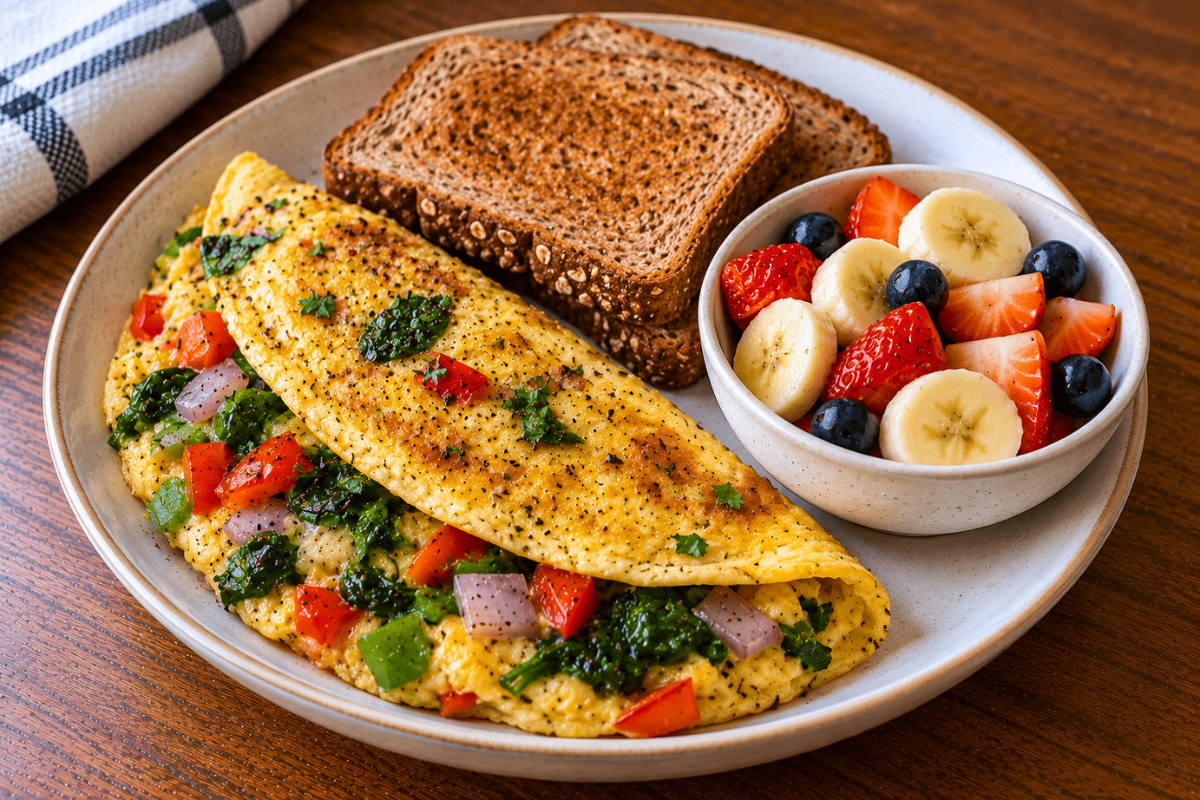
- Eggs
- Bell peppers, onions, and spinach
- Whole-grain toast
- Fresh fruit
Lunch: Black Bean and Avocado Bowl
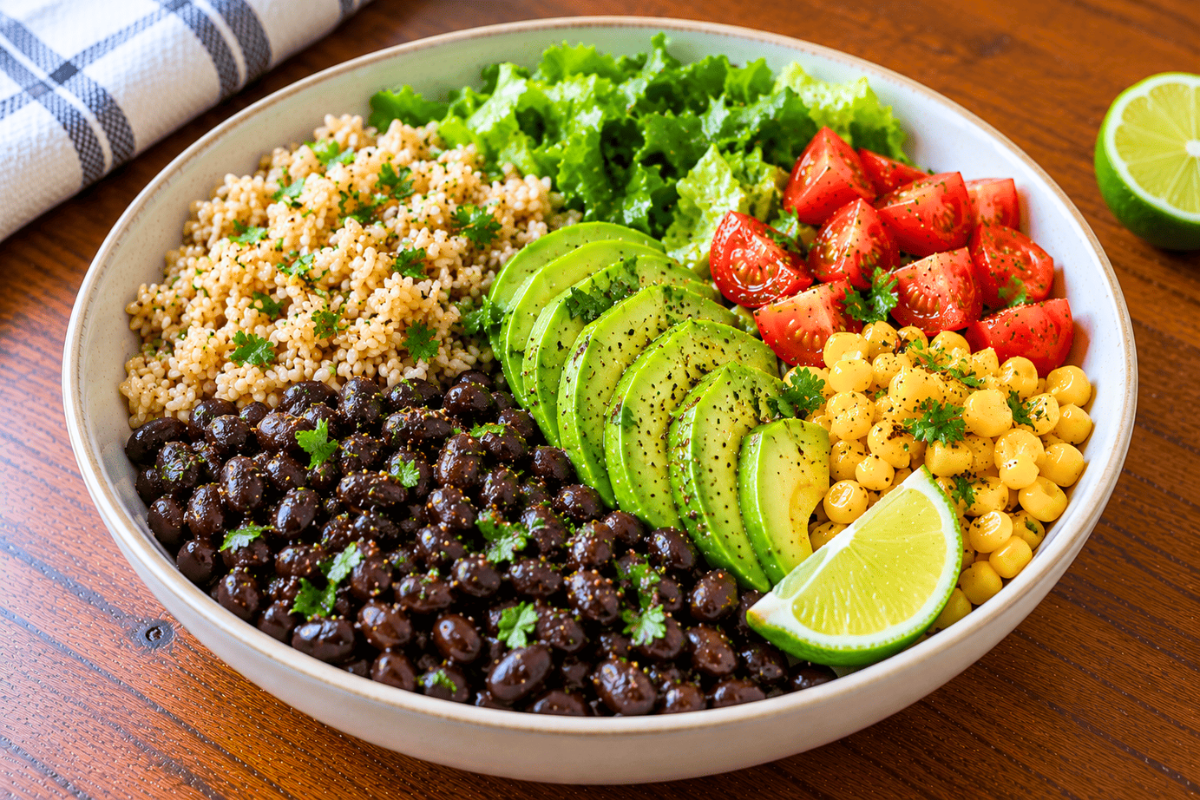
- Black beans
- Brown rice
- Lettuce, tomatoes, and corn
- Avocado and lime
Dinner: Baked Chicken with Sweet Potato
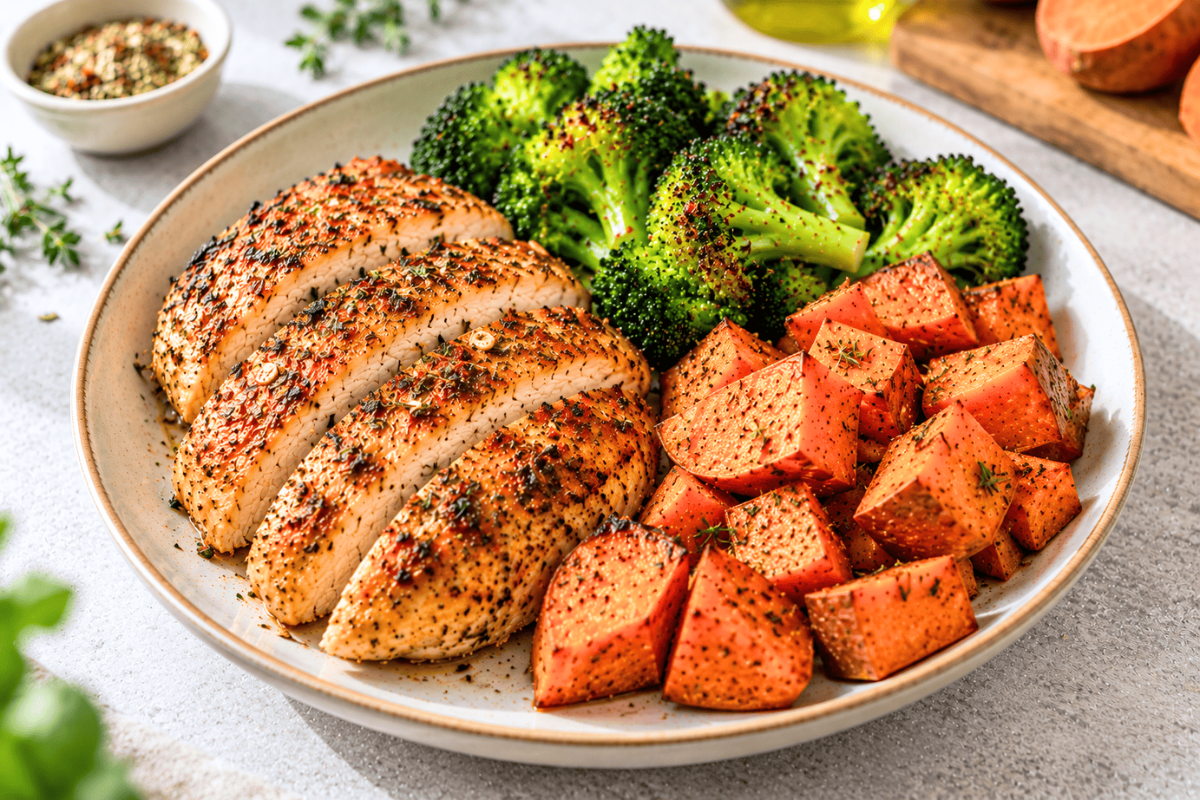
- Baked chicken
- Roasted sweet potato
- Green beans or broccoli
- Herbs and spices
Optional snack: Air-popped popcorn or a piece of fruit with nuts.
Why it works: This day combines protein, vegetables, beans, and whole-food carbohydrate sources without making cooking complicated.
Day 7: Easy Meals to Finish the Week
Breakfast: Overnight Oats
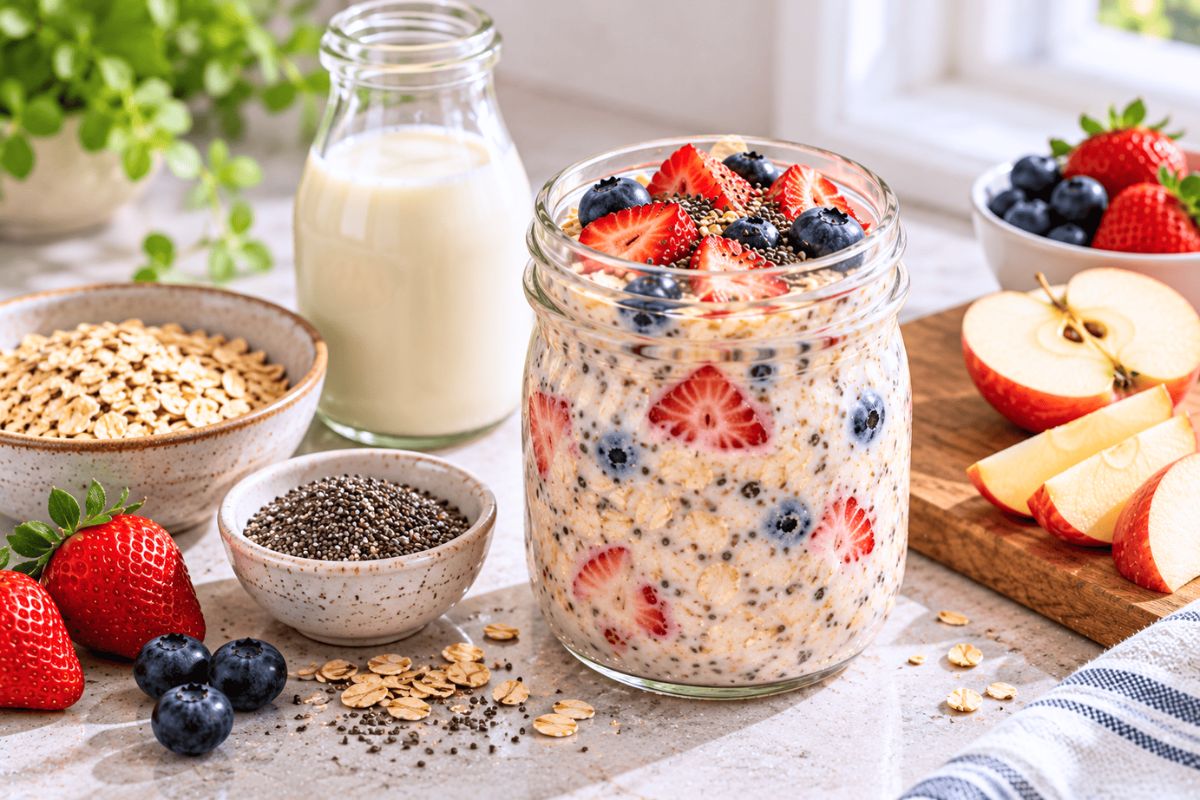
- Rolled oats
- Milk or unsweetened soy milk
- Chia seeds
- Berries or sliced apple
Refrigerate overnight and add your preferred toppings in the morning.
Lunch: Egg and Avocado Toast
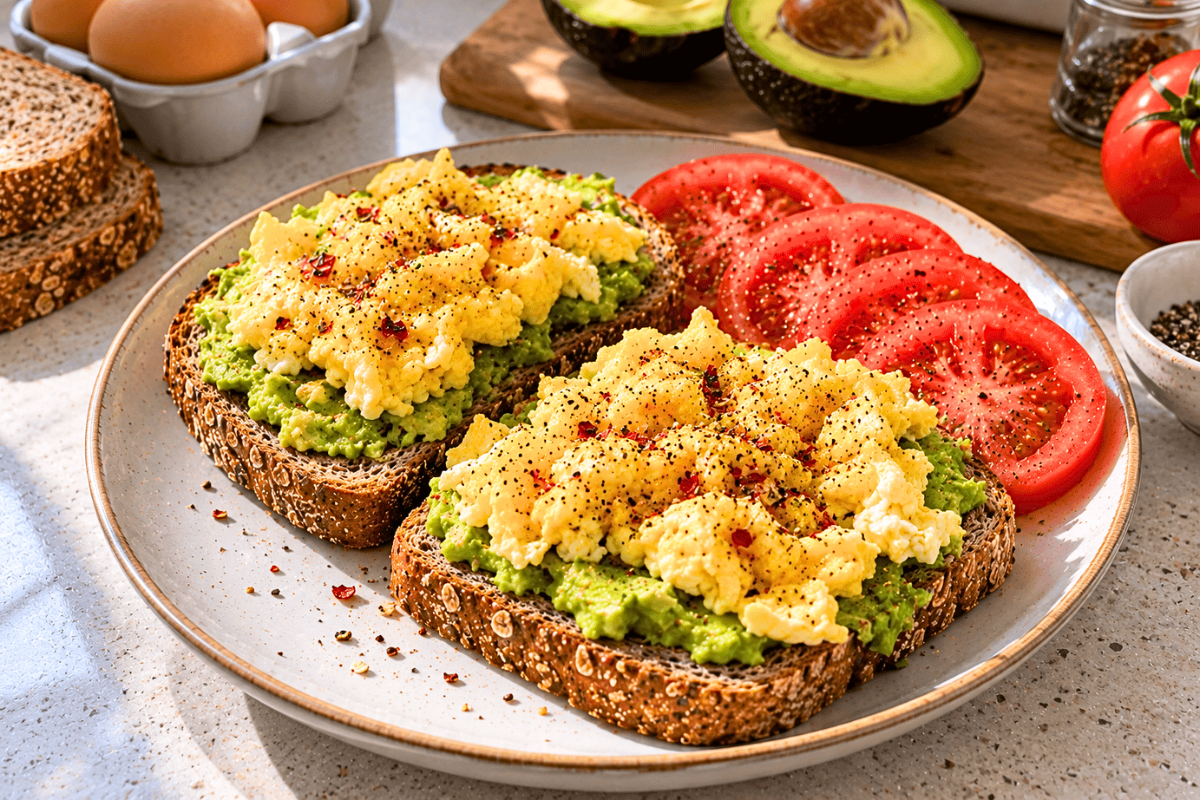
- Boiled or scrambled eggs
- Whole-grain toast
- Avocado
- Tomato slices
Dinner: Homemade Chicken or Tofu Bowl
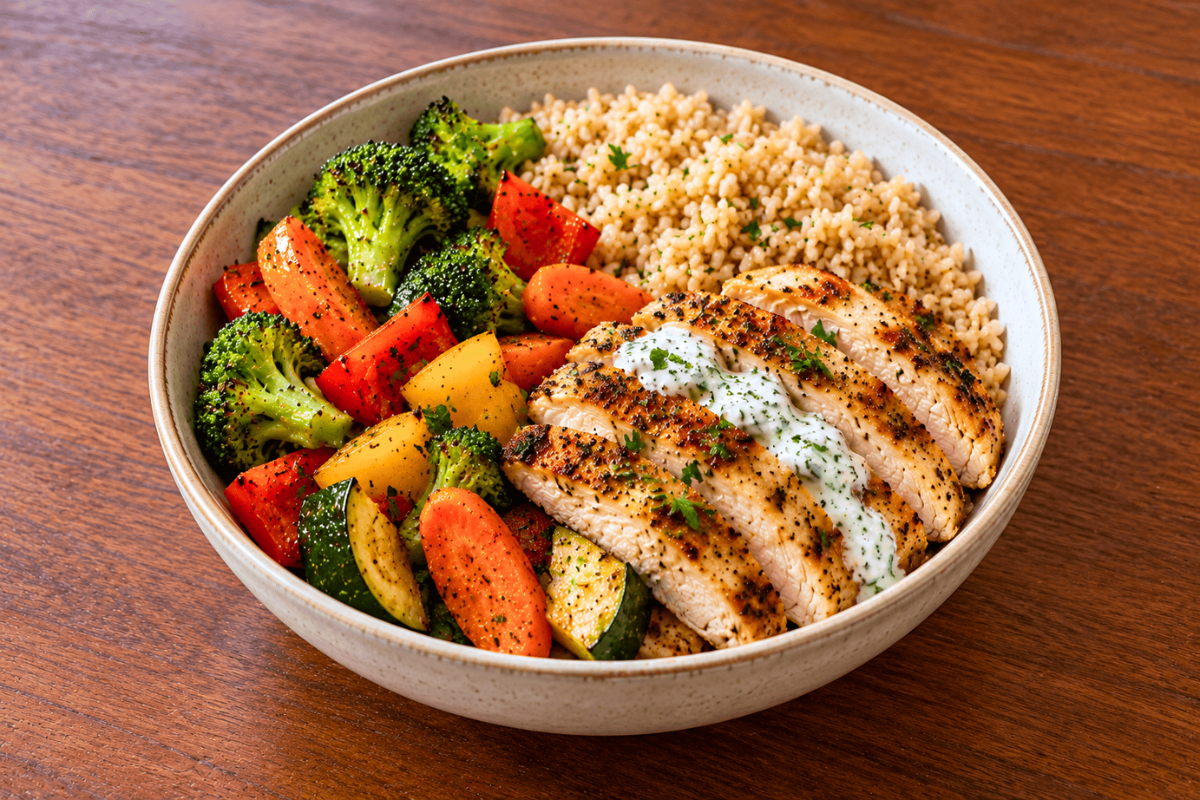
- Grilled chicken or tofu
- Brown rice
- Roasted or steamed vegetables
- Yogurt-herb or lemon dressing
Optional snack: Greek yogurt, fruit, or hummus with vegetables.
Why it works: Simple meals and flexible ingredients can help you transition into the following week without starting over.
Grocery List for Your 7-Day Meal Plan
Planning your groceries ahead of time can make this 7-day weight loss meal plan easier to follow throughout the week.
Use the grocery list below as a starting point. Adjust the quantities based on the number of people you’re cooking for, your portion sizes, and your food preferences.
Protein Foods
- Eggs
- Chicken breast
- Salmon or another fish
- Lean ground turkey
- Canned tuna
- Plain Greek yogurt
- Cottage cheese
- Tofu
- Chickpeas and beans
Fruits and Vegetables
- Bananas
- Apples
- Strawberries or blueberries
- Avocados
- Spinach and mixed greens
- Broccoli
- Bell peppers
- Carrots
- Cucumbers
- Tomatoes
- Onions
- Green beans
- Sweet potatoes
Whole Grains and Carbohydrates
- Rolled oats
- Brown rice
- Quinoa
- Whole-grain bread
- Whole-wheat tortillas
- Whole-wheat pasta
- Regular or sweet potatoes
Healthy Fats and Pantry Essentials
- Olive oil
- Peanut butter
- Chia seeds
- Nuts
- Hummus
- Lemon or lime
- Garlic and ginger
- Cinnamon, cumin, and black pepper
- Lower-sodium soy sauce
Budget tip: Choose frozen vegetables and fruit when they’re more affordable. Canned beans, lentils, eggs, oats, and seasonal produce can also make meal planning more economical.
How to Meal Prep for the Week
You don’t need to cook every meal from scratch each day. A little preparation can save time and make it easier to follow your plan.
1. Plan Your Main Meals
Choose a few breakfasts and lunches that you enjoy. Repeating meals is perfectly fine if it makes your routine easier.
2. Prepare Ingredients in Advance
Cook a batch of rice or quinoa, wash vegetables, and prepare a protein source. Divide foods into clean containers for convenient meals.
3. Keep Easy Snacks Available
Wash fruit, portion nuts, or prepare vegetables with hummus. Having convenient options ready can help when hunger strikes.
4. Store Food Safely
Refrigerate cooked perishable food promptly, generally within two hours. Use refrigerated leftovers within three to four days, or freeze portions for later. Reheat leftovers thoroughly.
5. Leave Room for Flexibility
If you eat a different meal, enjoy a restaurant dinner, or miss a planned snack, simply return to your usual routine at the next meal. One meal doesn’t determine your progress.
Benefits of This 7-Day Weight Loss Meal Plan
This 7-day weight loss meal plan offers a simple way to organize your meals and build healthier eating habits. It uses everyday ingredients, balanced meal ideas, and easy recipes that fit into a busy routine.
- Easy meal planning: Plan your breakfast, lunch, dinner, and snacks for the entire week.
- Balanced food choices: Include protein, vegetables, fruits, and whole grains in your daily meals.
- Budget-friendly ingredients: Use familiar foods such as oats, eggs, beans, yogurt, and seasonal vegetables.
- Less mealtime stress: Prepare ingredients ahead of time and spend less time deciding what to eat.
- Sustainable habits: Focus on consistent, balanced eating rather than skipping meals or following extreme diets.
Remember, healthy weight management takes time. Adjust portion sizes to your hunger, activity level, and individual needs.
How to Make This Meal Plan Work for Weight Loss
A meal plan can help organize your eating habits, but weight changes depend on several factors, including total food intake, physical activity, sleep, medications, and individual health.
These practical habits can help support your goals.
Build a Balanced Plate
A simple visual guide is to fill about half your plate with vegetables and fruit, one-quarter with protein-rich foods, and one-quarter with grains or other starchy foods. Adjust this balance to your preferences and nutritional needs.
Include Protein at Meals
Eggs, chicken, fish, tofu, yogurt, lentils, and beans are useful protein sources. Including them in meals can help with fullness and muscle maintenance.
Choose Fiber-Rich Foods
Oats, beans, fruit, vegetables, and whole grains provide fiber. Increase fiber gradually and drink enough fluids to help your digestive system adjust.
Don’t Eliminate Entire Food Groups
You can include carbohydrates, fats, and foods you enjoy as part of a balanced eating pattern. Very restrictive diets may be difficult to maintain and can leave you feeling hungry or deprived.
Get Enough Sleep
Sleep supports overall health and can influence hunger, appetite, and daily energy. Aim for a consistent sleep schedule and an amount of sleep appropriate for your age and needs.
Track Progress Without Obsessing
If you choose to monitor your weight, look at longer-term trends rather than daily fluctuations. You can also notice changes in energy, strength, cooking habits, and how consistently you follow your routine.
Common Weight Loss Meal Planning Mistakes
Avoid these common pitfalls when starting your plan.
- Skipping meals to save calories: This can leave some people overly hungry later. Choose a meal pattern that works for your schedule and appetite.
- Eating too little: An overly restrictive plan may not provide enough energy or nutrients. Make sure your meals are satisfying and varied.
- Avoiding all carbohydrates: Whole grains, potatoes, fruit, and beans can fit into a balanced weight-management plan.
- Relying on detox drinks: No special drink is required to detox your body or guarantee fat loss. Your liver and kidneys perform important waste-processing functions.
- Expecting rapid results: Weight changes vary from person to person. Sustainable habits are more useful than chasing dramatic short-term changes.
- Giving up after one unplanned meal: A flexible approach makes it easier to return to your routine without guilt.
Frequently Asked Questions
What is the best meal plan for weight loss beginners?
A useful starting point includes regular, balanced meals with protein-rich foods, vegetables, fruits, whole grains, and appropriate portions. The best plan is one you can afford, enjoy, and maintain.
Can I lose weight by following a 7-day meal plan?
A 7-day plan can help you organize meals and establish healthier habits. However, one week does not guarantee a specific amount of weight loss. Results depend on your overall eating pattern, activity, health, and other individual factors.
How many calories should I eat to lose weight?
Calorie needs vary with age, sex, height, weight, activity level, and health circumstances. There is no single calorie target that works for everyone. A registered dietitian or healthcare professional can help you determine an appropriate target, especially if you have a medical condition or a history of disordered eating.
Do I need to stop eating rice or bread to lose weight?
No. Rice and bread can be part of a balanced eating plan. Whole-grain options provide more fiber, but portion sizes and your overall eating pattern matter more than automatically eliminating a particular food.
What can I eat when I’m hungry between meals?
Try fruit with yogurt, vegetables with hummus, an egg with whole-grain toast, or a small serving of nuts and fruit. Choose a snack that suits your hunger and nutritional needs. If you’re frequently hungry, your main meals may need adjusting.
Is meal prepping necessary for weight loss?
No. Meal prepping is optional. It can save time and make food choices easier, but you can also prepare simple meals as you go.
Can I follow this meal plan if I’m vegetarian?
Yes. Replace meat and fish with tofu, tempeh, beans, lentils, chickpeas, eggs, or dairy products if you eat them. Make sure your overall diet provides enough protein, iron, vitamin B12, and other essential nutrients.
Should I exercise while following this meal plan?
Physical activity supports overall health, strength, and fitness. You can start with activities appropriate for your ability, such as walking, and gradually build a routine. You don’t need to begin an intense exercise program to improve your eating habits.
The best 7-day weight loss meal plan is one that offers balanced meals, fits your lifestyle, and helps you develop habits you can maintain.
Trusted Healthy Eating Resources
For more guidance on healthy eating and weight management, explore these trusted resources:
- For readers in the United States: The CDC’s Healthy Eating Resources offers guidance on healthy eating and managing weight.
- For readers in Canada: Canada’s Food Guide provides practical recommendations for balanced meals and healthy food choices.
Use these resources alongside this 7-day weight loss meal plan to help you make informed food choices that fit your lifestyle.
Final Thoughts
A healthy weight loss meal plan doesn’t need to be complicated, expensive, or restrictive. Start with simple meals, include a variety of nutritious foods, and prepare ingredients ahead of time when convenient.
Use this 7-day plan as a flexible guide rather than a strict set of rules. Adjust ingredients and portions to your needs, enjoy foods you like, and focus on habits you can continue beyond one week.
If you have diabetes, kidney disease, are pregnant or breastfeeding, take medications that affect blood sugar or appetite, or have specific dietary needs, consult a qualified healthcare professional before making substantial changes to your diet.
Disclaimer: This article is for general educational purposes only and is not a substitute for individualized medical or nutrition advice.